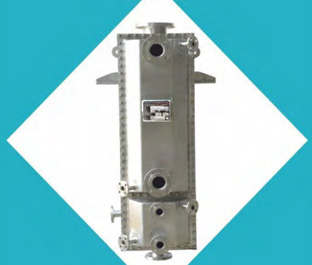
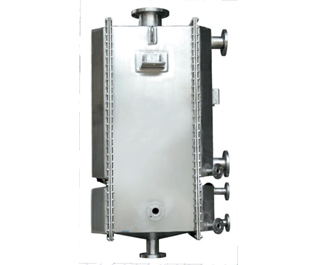
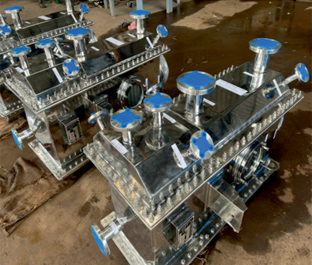
Box Type Heat Exchanger
Various types of heat exchangers, such as plate-type and plate-fin models, are widely known and used across industries. However, with increasing demands in chemical processing and the need for improved efficiency, there has been a push for more advanced solutions. In response to these evolving requirements, we have developed an innovative and enhanced design known as the Box Type Heat Exchanger, offering superior performance compared to.
Box Type Heat Exchanger - Technical
Specifications
Box Type Heat Exchangers are produced using modern technology in compliance with international quality and safety standards. Each unit is carefully tested across multiple parameters by experts to ensure reliable performance and quality before delivery.
Key Performance Highlights:
• low vapor loss ranging from 0.05% to 2%,depending on application
• Stable flow rates between 30% to 5O%, based on the cooling medium used
• Precise temperature control with a 6T of 2″C to 4″C
These exchangers are designed for durability in demanding environments, offering strong corrosion resistance, superior finish, and robust construction making them a reliable and efficient alternative to conventional systems.
Core Principels and Function of Heat Exchangers
A heat exchanger is a specialized system designed to transfer thermal energy between two or more fluids while keeping them physically separated by a solid metal barrier. This process, essential for both heating and cooling applications, involves heat passing from the warmer fluid through the metal wall to raise the temperature of the cooler fluid. To achieve maximum efficiency, engineers prioritize high fluid velocity, turbulence, a significant temperature gradient, and expansive surface areas. While the shell and tube design is a common industry standard, the Box Type Heat Exchanger has been developed as a more advanced alternative, offering superior heat transfer performance through optimized design characteristics.